



I have written quite a bit on the differences between Lasik and PRK (Primer on PRK vs Lasik and Lasik vs PRK: What the Lasik Doctor Doesn’t Tell You – Short story: Run screaming from Lasik, it’s dodgy as hell, the very definition of a ‘quick-fix’), and I’ve written about my own PRK experiences (My Laser Eye Surgery, Part I: PRK Pre-Op Preparation, My Laser Eye Surgery, Part II: The PRK Operation, My Laser Eye Surgery, Part III: PRK Post-Op Recovery), but I haven’t yet spoken much about my own side-effects from my laser eye surgery.
Six-plus years after surgery, I’m still incredibly happy with both the recovery and with the results (vision I think is still better than 20/20, but as I age it’s naturally deteriorating). I have suffered (and still ‘suffer’) one side-effect: haloing. Halos can occur regardless of whether you’ve gotten Lasik, which cuts a flap in the cornea (never get Lasik!), or PRK/Epi-Lasik/Lasek (note the e in Lasek), which do not cut flaps in the cornea.
What is Haloing?
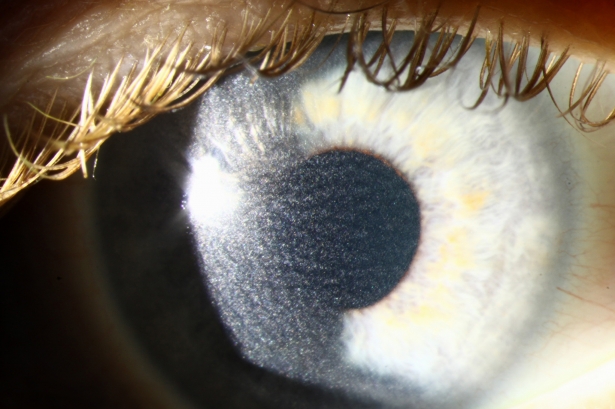
Haloing is an effect where your pupil opens wider than your corrected zone on your cornea (effectively a lens carved into the cornea itself). The image hitting your eye is simultaneously well-corrected and uncorrected. This results in an faint (typically less uncorrected light is getting through) overlapping blur, often with a starburst-like effect.
For me, before surgery, I would look at lights in the city night sky and see some form of haloing even with my contacts and glasses. I researched what it could look like and compared with what I was already getting. Hopefully the reader can make the same decision process.
I knew going into my surgery that my absolute widest pupil diameter was about 8-8.5mm. I measured my own in a *completely* dark room using a camera with a flash that would bounce off the ceiling and capture the pupils at the instant before they reacted to the flash. My laser doc measured my pupils in a semi-dark room and got about 6.5mm.
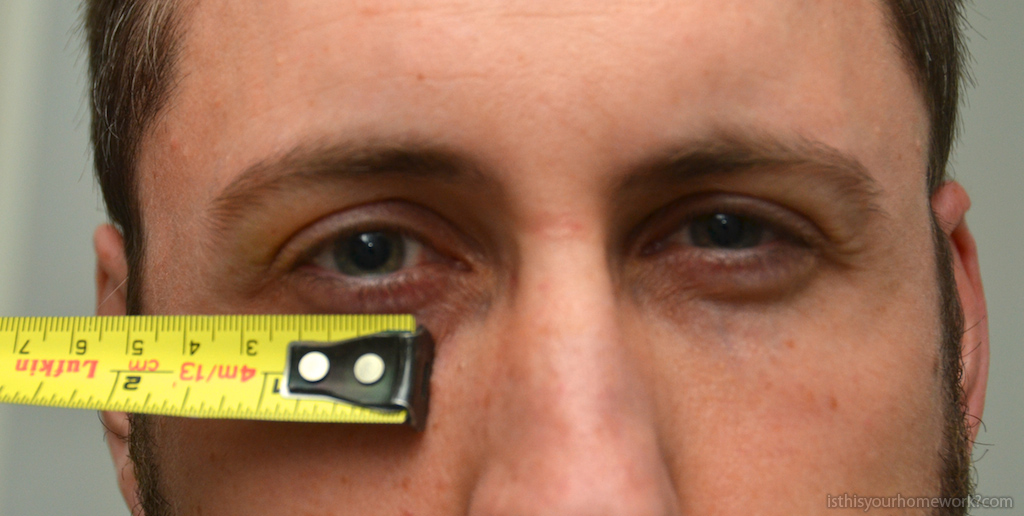
My highly scientific pupillary measurement process.
I knew that the system’s true correction zone (ignore any taper zone, that’s worthless, as I’ve written about in my Pre-Op Preparation article) was about 6-6.5mm, so I knew that I was going to be susceptible to haloing under very dark conditions. And I am, and will be forever. Unless I get my eyes done again in later years after my vision naturally deteriorates (and assuming these future machines have wider treatment zones).
In July of 2011, I had PRK laser eye surgery done. Shortly before, I wrote up a Primer on PRK vs Lasik that the reader may find interesting (TL;DR: Lasik is a dodgy quick-fix, avoid it, stick with PRK). Since then I expanded on the differences between PRK and Lasik, which hopefully provides the reader with all the questions they should be asking their laser eye surgeon: Lasik vs PRK: What the Lasik Doctor Doesn’t Tell You.
Before I went into the surgery, I did a great deal of research and found a dizzying array of variables that the prospective patient should take into account before choosing whether to have the surgery and where to have it performed. Resulting from this research I detailed the critically important questions that need to be asked before going under the laser: My Laser Eye Surgery, Part I: PRK Pre-Op Preparation. In a subsequent article, I described the PRK procedure itself: My Laser Eye Surgery, Part II: The PRK Operation.
Here, at long last is my account of my Post-PRK recovery. I’d written some of this in the months following my surgery for a friend who was considering the procedure, but for unknown reasons never posted it here. Well, here it is, some six-plus years later. And yes, I’m still extremely happy with my PRK experience. I would do it again in a heartbeat (though I’d look into the new epithelial-flap (not corneal-flap like Lasik!) methods like Lasek (note the e) or Epi-Lasik.
Day 1
No pain, just a little dryness. Feels like you’ve had non-breathable contacts in overnight (which you have). Overall, the eyes were scritchy, but I was happy playing Ray Charles in the blacked-out apartment. I listened to a few audio books, took lots of drops constantly (never did the pain ones as I mentioned), and chewed gum to try to get rid of the awful taste of the antibiotic drops as they drip down the back of your throat (you’ll love that bit!). Got driven by my friend to my 1-day follow up and everything was looking good. It was a very bright trip, but not as bad as immediately post-op. I took another half sleeping pill that night, not so much because I was uncomfortable, but because I didn’t do anything all day and wasn’t really tired. I wanted to make sure I got a ton of sleep though, as that helps the healing process.
Day 2
No pain but slightly more discomfort, you’re now at 48h wearing the same non-breathable bandage contact lens. I didn’t take any drugs (not even ibuprofen). Boredom was the worst part, but I entertained myself with frequent trips to the bathroom to pee from all the water I was drinking, by eating, with more audiobooks, and by listening to a couple DVDs with my eyes closed. I used my computer a tiny bit, but it was really bright, I couldn’t see very well (huge magnification required), and the strain wasn’t super good for me. That night I took another half of a sleeping pill for the same reasons.
Day 3
This is the only day that was bad. My eyes were very dry, I’d now been wearing the same non-breathable contacts for 72h and my eyes were really dry and really scratchy, even with the constant lubrication of the eye drops. This is where the nickel really dropped on the preservatives in the eye drops, as my eyes were really dry and scratchy and they were no longer providing much relief at all, almost making it worse. I took a T3 in the morning and it was a lot better. I went to my 3-day follow-up. I took the skytrain and bus over there. My light sensitivity was not crazy bad, but I did have two pair of sunglasses on and a hat. My progress was going well, they lowered the frequency of the steroid drops on one eye, and kept the other at the same level. Best thing was that they replaced the bandage contact lenses with a new pair. Hallelujah! That felt a hundred times better. With the new pair, the pain and discomfort didn’t make its way past the T3s. I kept on the T3s every 4h or so, when the pain would come back (ever had super dry eyes? It’s like that), and then my wife came home with the new preservative free drops. That made a huge difference, and I was finally over the worst of it that evening. I took another half of a sleeping pill that night, just to make sure I got a good night’s sleep through the discomfort, but I did sleep well.

Laser eye surgery is a very popular procedure for correcting near- and far-sightedness as well as astigmatism. Since the first techniques were developed in the early 1980s, many millions of people have gone under the laser hoping to eliminate the need for contacts and glasses. I myself underwent PRK in July, 2011. As is my nature, before I leapt, I looked very closely at the available information on laser eye surgery. What I found was surprising, even disturbing.
If you think there is only one type (or ten types) of laser eye surgery commonly performed, you are seriously under-informed about the entire procedure.
It wasn’t until I spent a great many hours investigating the procedure in detail, that I realized how stunningly little information is available to those who are performing their own casual investigation into laser eye surgery. I am dismayed at the lack of information or the outright misinformation provided by practitioners of the surgeries, no doubt in order to prevent scaring off their potential clientele.
The truth is that there are a huge variety of laser eye surgeries, all masquerading under one or two common names. If you think there is only one type (or ten types) of laser eye surgery commonly performed, you are seriously under-informed about the entire procedure. For example, two people, each having had the Lasik variety of surgery performed, could have had completely different surgeries, using completely different procedures, and with completely different risks, side-effects, and expected outcomes.
It is absolutely critical to know exactly why you would choose PRK, Lasek, Epi-Lasik, or especially Lasik.
I hope the following article will provide prospective patients a strong base-level of necessary understanding of the currently available methods of laser eye surgery. Rather than trusting what I provide here as gospel, I prefer that the reader take this article as a jumping-off point for their own education.
For reasons that will become readily apparent after reading this article, I strongly recommend against the corneal flap-based Lasik procedures. Ultimately though, you must find your own answers. Before undergoing surgery, you should educate yourself on the risks involved, you should know what questions to ask of a potential surgeon, and most importantly, it is absolutely critical to know exactly why you would choose PRK, Lasek, Epi-Lasik, or especially Lasik.
In July of 2011, I had PRK laser eye surgery done. Shortly before, I wrote up a Primer on PRK vs Lasik that the reader may find interesting (TL;DR: Lasik is a dodgy quick-fix, avoid it, stick with PRK). Since then I expanded on the differences between PRK and Lasik, which hopefully provides the reader with all the questions they should be asking their laser eye surgeon: Lasik vs PRK: What the Lasik Doctor Doesn’t Tell You.
Before I went into the surgery, I did a great deal of research and found a dizzying array of variables that the prospective patient should take into account before choosing whether to have the surgery and where to have it performed. Resulting from this research I detailed the critically important questions that need to be asked before going under the laser: My Laser Eye Surgery, Part I: PRK Pre-Op Preparation. In this article, I describe the PRK procedure itself and the subsequent recovery period. Edit: Here is the third part, detailing my post-op recovery: My Laser Eye Surgery, Part III: PRK Post-Op Recovery.
Summary First
It has been about three years since my PRK surgery, and I still couldn’t be happier. I reached better than 20/20 vision three weeks after surgery, and have had practically no side-effects with my 20/15 vision since around the four-week mark. I have not tested my vision for quite a while, but I don’t feel as if I’ve had much if any fall-off (your eyes will naturally get worse whether you have surgery or not). I still have better vision than I ever had before, and regularly am able to ‘show-off’ when discussing my PRK by reading things at distances others cannot. Before the surgery, I was about -4 in each eye with an astigmatism of around 1.00. I see much better now than I did with glasses or contacts before and my eyes are actually less dry and less red than they were before surgery. I have had zero regrets about the procedure.
While I have been on the ‘best case you can hope for’ end of the bell-curve of results. *knock wood*, I think perhaps that my efforts to assist in my healing provided at least some benefit to that experience. Along with my account of surgery and recovery, this article will also detail the steps I took to give myself the best possible chance to recover optimally, in the hopes that readers may benefit by it.
Day 0: Operation Scorched Orbs
Pre-Op: Peak Anticipation
The procedure was crazy fast. The time between arrival at the clinic and departure for home was about 45 min, and that’s including filling out the necessary paperwork, waiting 5-10 min for the pre-operative anesthetic drops to take effect, post-operative exam, etc. The actual procedure took about 5 to 10 minutes, maximum.
After I was signed in and waivered, I was brought into an examination room for one last look at my eyes, to ensure that nothing had changed and that I was still Go for Surgery. With the green-light, I was led to a bed in a quiet pre-op prep room and given some anesthetic drops for my eyes. I was then left alone for ten minutes, just outside the operating room, so that I could obsess once more over the risks of the coming procedure the anesthetic drops could take effect.
At length I was ready. A nurse fetched me and brought me into a medium-sized room that was dominated by the sight and sound of a large, droning machine. The machine itself was a desk-sized cabinet with a manhole-sized robotic surgery on an arm overhanging an attached bed. The contraption, made for a single purpose, sprouted a host of digital and optical display instrumentation, control knobs, and ventilation tubes. The sound it emitted was somewhat lower on the tonal register and decibel scale than a vacuum cleaner, but above in volume and pitch the buzzing of a wasp nest. It was a blanketing white noise, loud enough to soothe jangled nerves, and loud enough to isolate the room from sounds coming from without (coming from within too, for that matter). The machine would not have looked out of place on a Star Trek sickbay set. Come to think of it, it would not have looked out of place on the set of a Borg Cube assimilation chamber.
My heart-rate was at its highest at this point of Peak Anticipation.
The surgeon introduced himself and laid me on the bed. He proceeded to give a quick overview of the procedure, what I would experience, what it would feel like, and what was needed of me. The surgeon’s description of the process had no surprises for me, I knew the procedure fairly well, even having gone so far as to watch videos of the surgery online, and when he asked if I had any questions, I replied that I hadn’t.
Prior to this, I had been prepped by both technicians and ophthalmologists, they had given me the necessary information on the procedure, it’s risks, and it’s post-operative care, but this was the first time I’d been told the ‘nuts and bolts’ of using a high-powered laser to burn a new shape into my cornea. Based on my prior research, I was likely more informed than the vast majority who had laid on the bed before me. As I’ve mentioned previously, my one criticism of all the laser eye surgery providers is that they are not overly forthcoming with details on risk, complication, and actual procedure. They were all quite helpful when I asked for greater detail, or had specific questions (if they’re not, run the other way!), but none were forthcoming with more than the minimum required. I suppose this is necessary, as most truly don’t want to know more than the very high-level picture of risk and reward. The reader would be forewarned to do their own research before going under the laser, though I suppose that message is preaching to the choir in this account.
After the run-down of the surgery, and after one last chance to ask questions or back out, we began the assimilation surgery.
PRK Surgery: Blink and You’ll Miss It
A nurse inserted Clockwork Orange eye-priers, and dabbed a few drops of lubricant drops. Then, the bed I was on was swung under and into the machine. From above, the large, round robotic surgeon looked mostly benign, but from beneath, the beast’s many-eyed, many-fanged face felt uncomfortably close. That said, as a lover of all things novel, technological, and physiological, the dozen different lights and probes and nozzles of this technological terror were at once intimidating and fascinating. My heart-rate was at its highest at this point of Peak Anticipation.
In July of 2011, I had PRK laser eye surgery done. Shortly before, I wrote up a Primer on PRK vs Lasik that the reader may find interesting (TL;DR: Lasik is a dodgy quick-fix, avoid it). Long before signing up for the surgery, long before going under the laser, I did a ton of research. I had been interested in having it done since 1998, and only got it done last Summer, when I thought the tech was finally there (I felt it had been for the past few years) and when I finally had the time and money.
This will be the first of several posts which serve as a journal detailing my experiences with PRK. I’ll update this page with links to the subsequent journal entries. (Part 2 is up! Details of the day of surgery here: My Laser Eye Surgery, Part II: The PRK Operation, and so is Part 3, detailing the post-op recovery: My Laser Eye Surgery, Part III: PRK Post-Op Recovery.)
I am also not going to argue the case of PRK vs Lasik any further in these accounts, but I am planning for sometime in the future a more comprehensive breakdown of the differences between PRK, Lasik, and the other forms of surgery. Edit: Here it is: Lasik vs PRK: What the Lasik Doctor Doesn’t Tell You.
I am not going to mention any names, as I don’t want my accounts to be mistaken for an endorsement for, nor a warning against, any particular surgery centres. Hopefully this information will be sufficient for any prospective patients to know what questions to ask of their PRK surgeon, and to know what they might be in for with the procedure.
Summary First
It has been over 14 months since my PRK surgery, and I couldn’t be happier. I reached better than 20/20 vision three weeks after surgery, and have had practically no side-effects with my 20/15 vision since around the four-week mark. I was about -4 in each eye with an astigmatism of around 1.00. I see much better now than I did with glasses or contacts before and my eyes are actually less dry and less red than they were before surgery. I have had zero regrets about the procedure.
 Marc on
  Junior on
 Barbara Fuentes on
  Kathy on

